
CPG brands and distributors still struggle with fragmented tools. Merchandisers use one app for audits, sales reps use another for orders, and delivery teams rely on spreadsheets.
This creates data silos, slower fulfillment, missed reorders, and frequent out-of-stocks.
Modern retail execution platforms now combine audits, order capture, and routing. But not every solution connects the full workflow effectively.
This comparison reviews six platforms on integration quality, pricing clarity, rollout speed, and suitability for SMB and mid-market CPG teams in North America.
What to Look for in a Unified Platform
Finding a good unified platform for field sales, audits, and delivery takes more than checking features. The goal is one system that actually connects everything.
Focus on these points:
- Workflow should be seamless: audit photos leading to orders and deliveries without switching tools or manual fixes.
- Mobile experience must support full offline work with automatic sync.
- Pricing needs to be clear and flexible — per rep per month, no hidden fees or long contracts.
- It should integrate natively with your accounting/ERP system so data flows straight through.
- Setup should be quick, ideally within days or two weeks max.
- One dashboard should show real-time status across audits, orders, and deliveries.
Top 6 Platforms Compared
Here are six platforms that combine field sales, audits, and delivery:
SimplyDepo
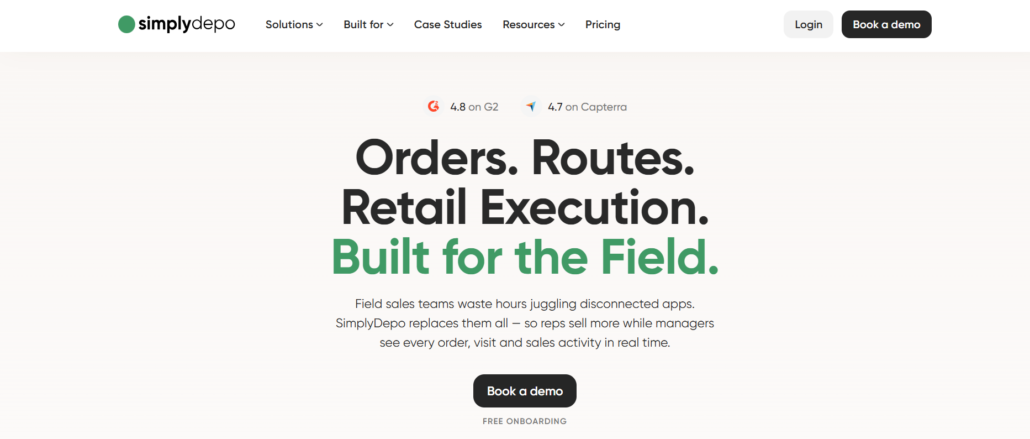
SimplyDepo is retail execution software designed for CPG brands and distributors. It’s a mobile-first platform that combines shelf audits, planogram compliance, photo reporting, in-store demos, and visit tracking with full field sales capabilities like order capture, DSD route planning, van sales, invoicing, and native sync with QuickBooks and Shopify.
Launched in 2022, the platform tackles a common pain point in CPG operations. Traditional retail execution tools usually end at the audit stage, while field sales apps rarely go beyond order entry. SimplyDepo bridges that gap by supporting the entire workflow in one app.
The software is built exclusively around consumer packaged goods needs. It also includes practical AI features that forecast demand, highlight top and underperforming SKUs, suggest better delivery routes, and flag compliance issues right away.
This means a rep can photograph a shelf, capture a reorder, plan tomorrow’s route, run the delivery, and sync the data to accounting systems without ever switching apps — even when working offline.
Core capabilities:
| Feature | Details |
| B2B Order Management | Quotes, drafts, invoicing, return handling |
| Retail Execution | Shelf audits, planogram compliance, photo logging |
| Route Planning | Optimization for efficient field operations |
| Integrations | Native QuickBooks & Shopify sync |
Pricing starts at $89 per rep per month with no annual contracts, no setup fees, and a 30-day free trial that includes team training. Teams can get started in days rather than months.
Cons: Limited to US and Canada operations—not designed for multi-region, multi-currency, or multi-language deployments across EMEA or APAC.
Who Should Still Choose SimplyDepo
SimplyDepo is a strong fit for SMB and mid-market CPG brands and distributors operating in the US or Canada that rely on in-store visits. Teams that need to connect shelf audits, order capture, and delivery workflows in one system will benefit the most.
It is especially useful for companies that want to replace multiple tools (audit app + order app + spreadsheets) with a single mobile workflow and avoid enterprise-level pricing or long implementations.
Skynamo
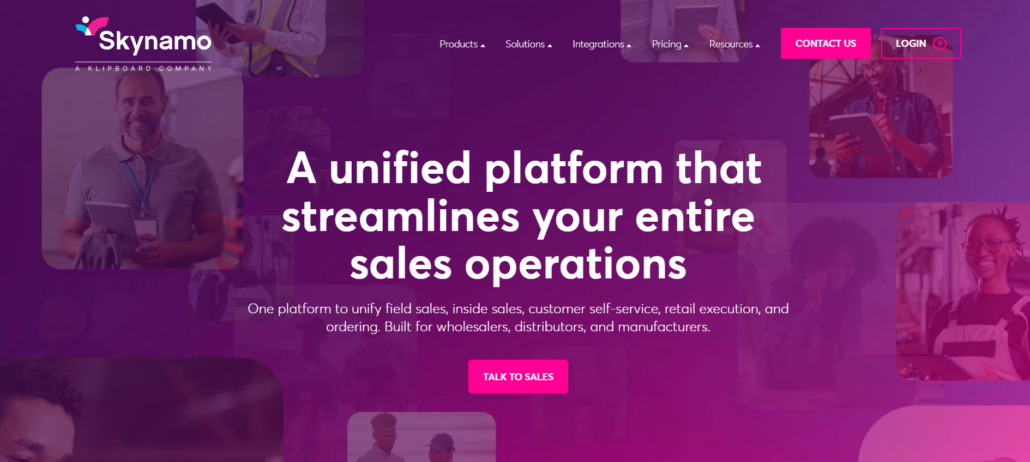
Skynamo is built for manufacturers, wholesalers, distributors, and importers. It handles customer relationships, order capture, and coordination across sales channels. The mobile app works offline. Reps can log visits, check catalogs, and take orders from the field.
Customers have their own branded portal to place orders. It brings together field sales, inside sales, and self-service.
It also delivers solid analytics and reporting, plus an AI module called Radar that spots trends and gives useful insights. Skynamo integrates with your existing systems to keep pricing, customer data, and orders consistent across the board.
While it supports some retail activities, its real strength lies in sales workflows and order management rather than deep in-store merchandising or auditing. It’s especially popular with companies that have complex B2B setups and operate across multiple regions — particularly in EMEA and APAC markets.
Cons: Users mention limited app layout customization and occasional connectivity issues. It is stronger for sales operations than dedicated retail execution. (Capterra & G2 reviews)
Who Should Still Choose Skynamo
Use Skynamo if your B2B sales team works across multiple countries or regions. It fits manufacturers, wholesalers, and distributors that want field sales tools, order capture, and customer self-service all in one place.
GoSpotCheck
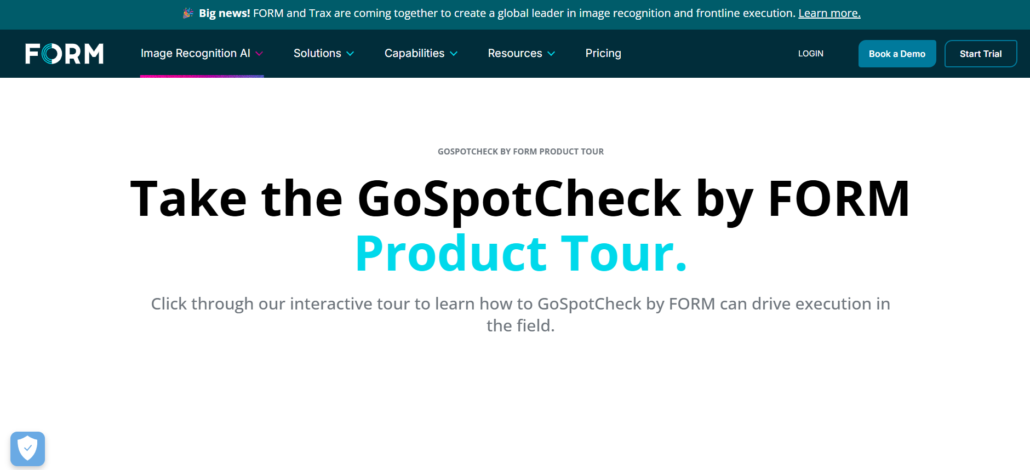
GoSpotCheck, now part of FORM, is a mobile field execution platform designed for frontline teams. It helps companies in retail, consumer goods, hospitality, and facilities management run structured audits, track tasks, and maintain compliance.
Teams can follow:
- customized workflows,
- log visits,
- capture photos,
- complete checklists across multiple sites.
Its image recognition feature stands out — it automatically pulls insights from field photos regarding placement, quality, or compliance.
Real-time dashboards give managers clear visibility into team performance. The platform focuses purely on execution and data collection rather than sales orders or DSD processes. It’s aimed at mid-sized and enterprise organizations, with a minimum of 20 users.
Cons: Pricing is quote-based with a 20-user minimum, and the platform does not include order management, invoicing, or route accounting capabilities needed for full CPG sales and distribution workflows. (Capterra reviews)
Who Should Still Choose GoSpotCheck (FORM)
GoSpotCheck is a good fit for retail, hospitality, or facilities management teams that run lots of checklists, surveys, and compliance checks. It gives strong visibility into field operations and standardized workflows. Pick it if you need structured task management and audits — not order management or delivery.
WizCommerce
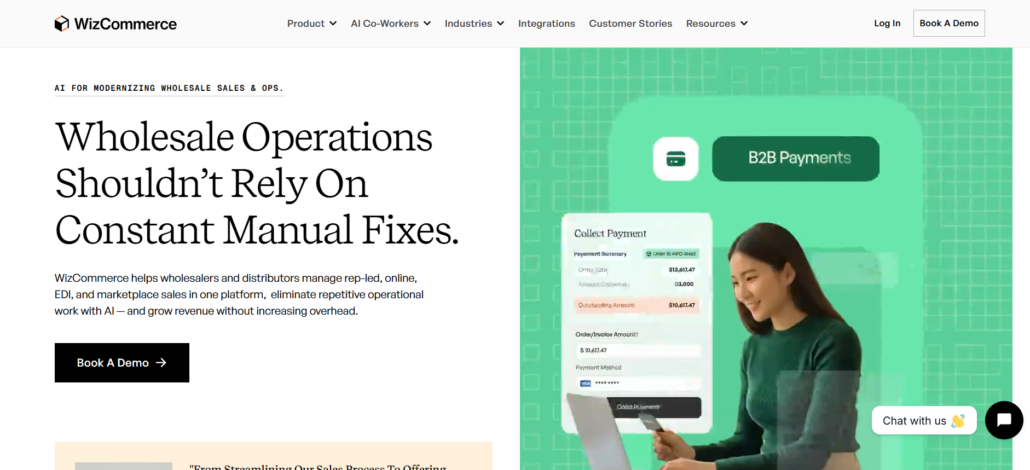
WizCommerce is an AI-powered platform built for wholesalers, distributors, and manufacturers who want to handle both online and field sales in one place. It brings together a B2B storefront and a mobile app for sales reps.
Reps can easily create quotes, capture orders, and manage customer relationships through the WizOrder field app. On the digital side, customers can browse and buy through an online store. The platform also supports payments, marketplace connections, and EDI orders.
AI features help speed things up by suggesting products, generating quotes, and prioritizing follow-ups. You also get:
- smart catalogs,
- real-time inventory visibility,
- solid integrations with ERP and accounting systems.
It works best for wholesale businesses looking to combine e-commerce with rep-driven selling. While it supports field orders, it’s not designed for retail execution like store audits or merchandising.
Cons: Users list some weaknesses around the learning curve, inaccuracy, complex implementation, accuracy issues, and access issues. It is not positioned for shelf audits, merchandising, or retail execution. (G2 reviews)
Who Should Still Choose WizCommerce
Choose WizCommerce if you are a wholesaler focused on AI-driven sales, online ordering, and rep-assisted workflows. It fits digital and B2B commerce, not in-store execution.
Leadbeam
Managing leads and activities in the field can be pretty frustrating without the right tools. Leadbeam tries to fix that by acting as a smart AI layer on top of your current CRM system.
Reps can quickly log visits using voice notes or photos, create leads on the spot, and schedule follow-ups — all with minimal typing. It automatically pushes the data back into your CRM. On top of that, it offers territory intelligence to help discover new prospects and optimize daily routes.
The AI side really stands out. It can summarize visits, suggest next best actions, and give managers better visibility through performance dashboards.
Leadbeam integrates smoothly with major platforms like Salesforce, HubSpot, and others. It’s a solid choice for B2B teams focused on lead gen and relationship management, but it’s not built for order taking, DSD routes, or retail execution.
Cons: Users mention occasional lag or slow performance. It also does not cover order management, DSD, or retail execution workflows. (G2 reviews)
Who Should Still Choose Leadbeam
Use Leadbeam if your outside sales team spends most of its time on lead gen, updating CRM, and managing territories. It is good for teams that want to capture data faster, automate follow-ups, and prioritize the right prospects. Do not expect it to handle orders or in-store work — it is designed for relationship-building and pipeline management.
Spotio
When it comes to outside field sales, tracking visits, logging activities, and managing territories are key. One common challenge is overlapping efforts where reps are active in the field but aren’t closing orders or executing retail tasks.
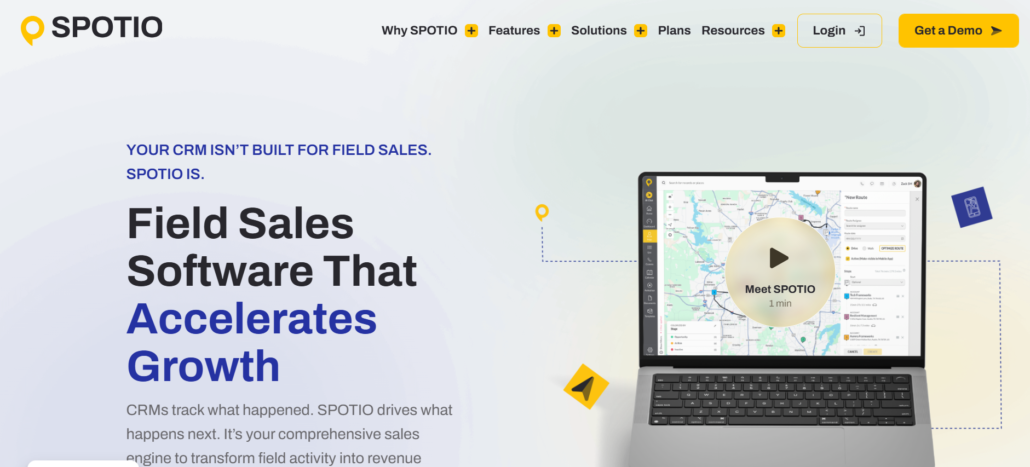
SPOTIO is built specifically for teams doing territory-based selling. It helps sales reps and managers track daily activities, map out territories, and get a clearer view of the pipeline. You can plan routes smarter, prioritize the right prospects, and organize your coverage areas based on real location data.
What stands out is the real-time tracking — managers can actually see what’s happening in the field and how it connects to results. It also offers performance analytics, leaderboards, and some automation for follow-ups. Plus, it plays nicely with most CRMs.
SPOTIO works best for B2B and B2C sales teams in industries like construction, telecom, and business services. It’s not designed for order processing, DSD routes, or in-store retail execution.
Cons: Users report connectivity issues, glitches, and weaker reporting in some reviews. It is not built for order processing, DSD, or retail execution. (G2 and Capterra reviews)
Who Should Still Choose SPOTIO
Use SPOTIO if you run a field sales team that sells by territory. It is a good fit for construction, telecom, and business services companies that want to track reps, plan routes, and manage pipelines.
Do not expect it to handle orders or store-level work — it is built for sales visibility, not operations.
Conclusion
Selecting a unified platform requires focusing on workflow elimination, not feature counts. Prioritize transparent per-rep pricing, implementation measured in days, and native accounting integration.
The goal is one cohesive workflow where a single rep can complete an audit, capture a reorder, plan a route, and sync an invoice without switching apps or manual reconciliation. Any platform that does not deliver that unified loop leaves the core problem of fragmentation unsolved.


